
There is a particular kind of silence that follows a genocide. Not the silence of peace. The silence of subtraction. Of everything that was, and is no longer.
The survivors didn't grieve the way grief is supposed to work. They arrived in Yerevan, in Beirut, in Paris, in Fresno with almost nothing, and immediately began to build. Not because they had recovered. Because building was the only answer they knew how to give. Because the alternative was to let the silence win.
That instinct, to plant, to build, to create in the face of erasure, is what I have come to call Armenian Intelligence. Not a concept. A lived practice. Passed down without being written down. Carried in the hands of people who had every reason to stop, and didn't.
My grandfather was one of those people. Tsolak Ruben Safaryan was born into that silence.
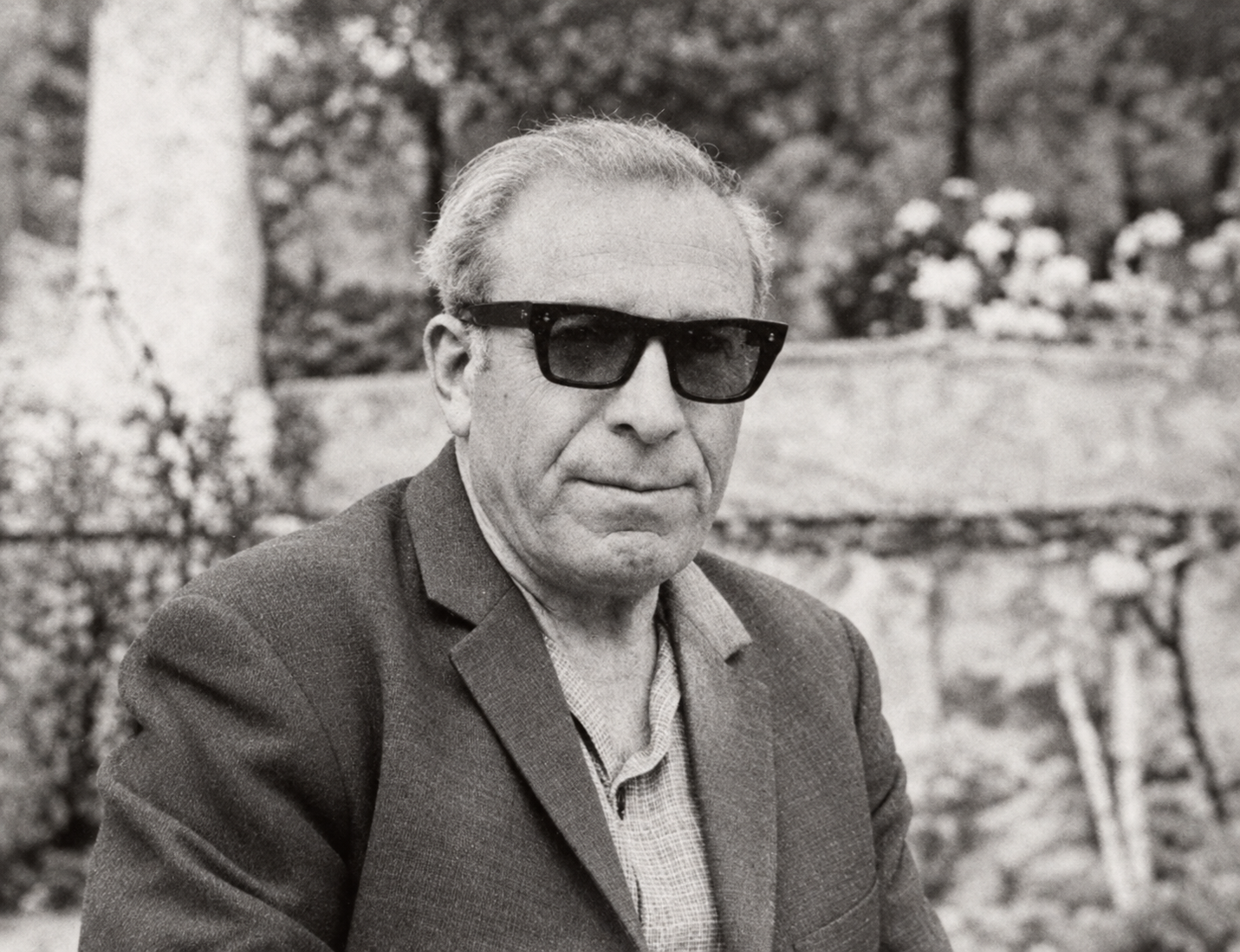
His family was among the last to leave Igdir, father, mother, four brothers, one sister, in what Armenians remember as the final exodus of Igdir. They arrived in Yerevan with nothing. For a time, they lived in a park.
A family, sheltering among trees, in the city that would become their country. I have never been able to decide whether that is tragedy or prophecy. Perhaps it is both.
He lost his mother at three. His sister raised him. And very early, earlier than any child should, he went to work. He was one of "the boys who sold water in the streets of Yerevan". Small. Stubborn. Already learning that survival is not passive. That you move, or you disappear.
He studied. Agrarian University. Then Moscow for his degree. Then the Higher Party School. In 1949, he was appointed director of the Yerevan Forest Reclamation Station. He was not yet thirty. He would hold that role for more than thirty years. And in those thirty years, he would do something that very few people, in any country, in any century, actually manage to do. He would change the landscape of a city with his bare hands.
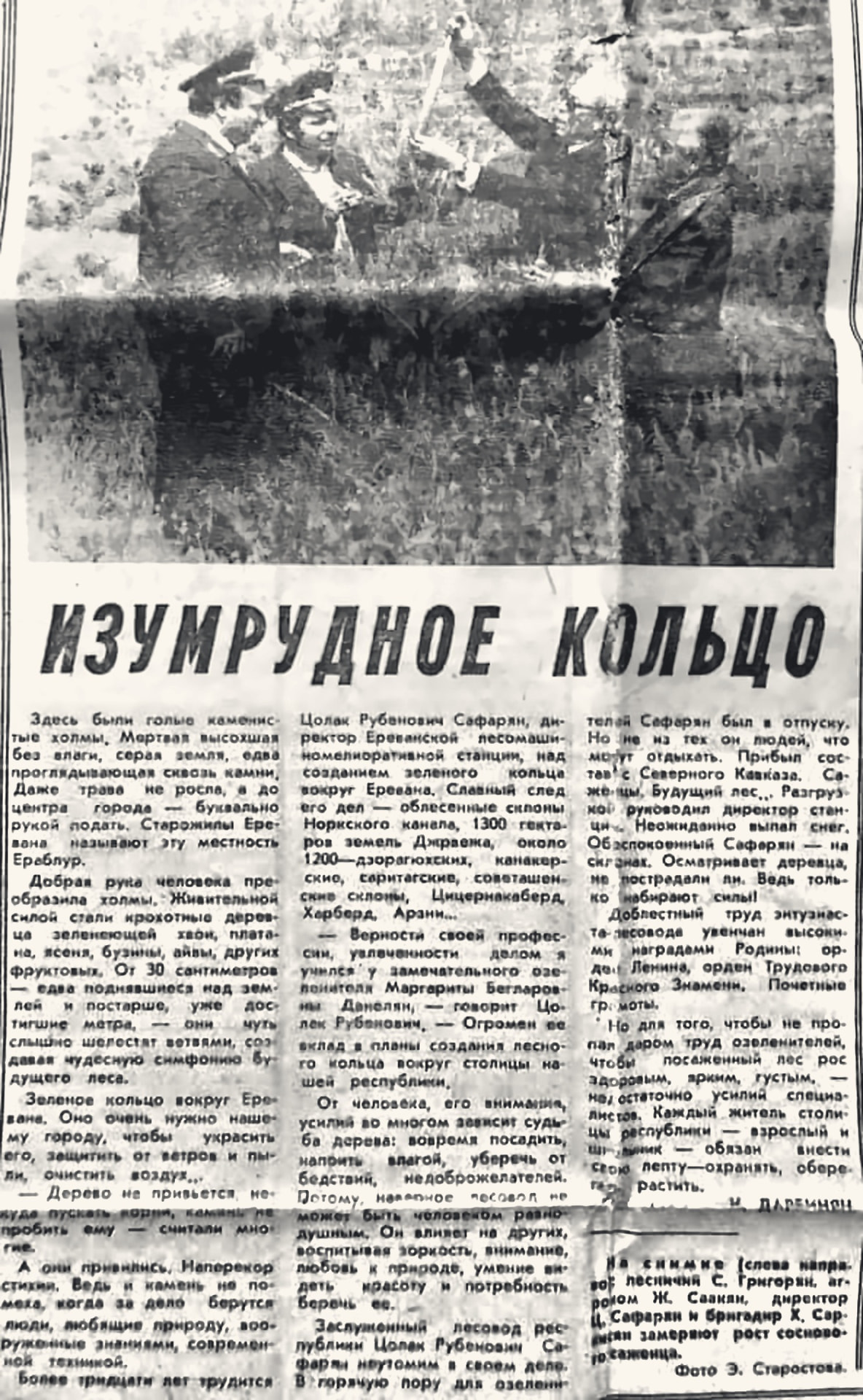
Where bare, rocky hills once stood, the earth lay dead and desiccated, a grey expanse of barren soil barely visible beneath the stones. Not even grass could take hold, yet the city centre was scarcely a stone's throw away. The old-timers of Yerevan know this place as Yerablur.
"A tree will never take root here, there is nowhere for it to anchor; it cannot break through stone," many believed.
And yet, they took root. In defiance of the elements. For even stone is no obstacle when the work is undertaken by people who love nature and are armed with knowledge and modern technology.
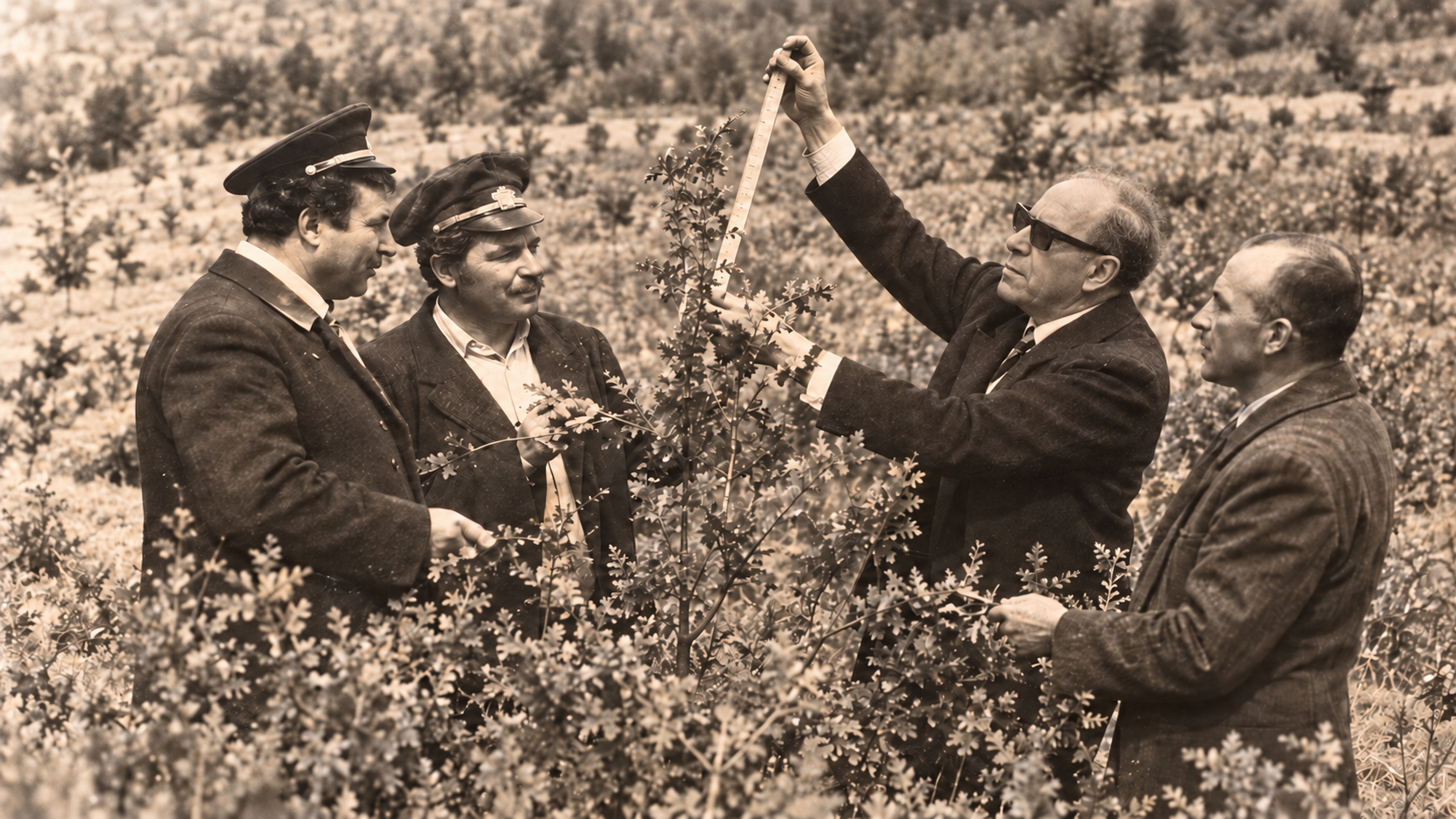
For more than thirty years, Tsolak Ruben Safaryan devoted himself to the creation of a green ring around Yerevan. The enduring legacy of his labours is (was) written across the afforested slopes of the Nork Canal, 1,300 hectares of land at Jrvezh, approximately 1,200 at Dzoragugh, and the slopes of Kanaker, Saritagh, Sovetashen, Tsitsernakaberd, Harbert, and Arzni. Tiny saplings of green conifer, plane, ash, elder, quince, and other fruit-bearing trees, some no taller than thirty centimetres, others already reaching a metre, rustling softly in the breeze, composing what one journalist of the time called "a wondrous symphony of the forest yet to come."
He dreamed of a Yerevan where the trees bore enough fruit that anyone walking through the city could simply reach up and eat. Fruit-bearing trees for everyone. Abundance as a public right. A city generous enough that no child would go without.
During the busiest season for those engaged in greening the city, Safaryan was on leave, yet he was not the sort of man who knows how to rest. When a train arrived from the North Caucasus carrying saplings, it was the Station Director himself who oversaw the unloading. When snow fell unexpectedly, he was out on the slopes, inspecting the young trees to see whether they had suffered. After all, they were only just finding their strength.
"I learned dedication to my profession and passion for my work from a remarkable horticulturalist, Margarita Beglarovna Danelyan," he said. "Her contribution to the plans for creating a forest ring around the capital of our republic has been immeasurable."
The fate of a tree depends in large measure on human care and effort, on planting it at the right time, providing it with water, and protecting it from adversity and those who would do it harm. Perhaps that is why a forester cannot afford to be an indifferent person. He shapes those around him, cultivating attentiveness, care, a love of nature, and the ability to perceive beauty and feel compelled to preserve it.
He was awarded the Order of Lenin, the Order of the Red Banner of Labour. He was named Honoured Forester of the Armenian SSR. He listened to the Beatles and Tom Jones. He loved Hekimyan's songs. He played the clarinet. He read everything.
He was, in other words, fully human. And also something more specific than that, Armenian in the way that generation was Armenian. Shaped by loss into an almost unreasonable commitment to building something that would outlast him.
I think about him often when people talk about what Armenia needs. New investment. Better infrastructure. Stronger institutions. All of it true. All of it necessary. And yet none of it captures the thing that actually kept this people alive across centuries of dispossession. It wasn't strategy. It wasn't resources. It was something closer to what my grandfather did every morning when he drove up those bare hillsides and got to work on ground that everyone else had written off. A refusal, quiet and absolute, to accept that nothing would grow.
That is the thing I have started calling Armenian Intelligence. Not a brand. Not a conference theme. The specific, irreplaceable, earned wisdom of a people who have survived by building, always building, even when the ground beneath them was stone.
Yerablur is a military cemetery now. The same hills he spent thirty years coaxing back to life hold the graves of boys who died in the war with Azerbaijan.
Where the cemetery hasn't come, the construction has, buildings rising on land that was once forest, the emerald ring thinning, breaking, disappearing block by block, deal by deal, permit by permit.
This is not a metaphor. This is what is (has been) happening to Armenia for a while now. The green is going. The stories are going. The people who remember why any of it matters are going, one by one, year by year, the last generation that still carries what was passed down without being written down.
And if we lose them without listening, without recording, without passing it forward, we will not just have lost stories. We will have lost the one thing that has kept us coherent across 3,500 years of history, diaspora, genocide, and reinvention. We will have lost Armenian Intelligence itself.
This is the question I keep returning to. Not whether Armenia will survive geopolitically, though that question is urgent enough. But whether we, as Armenians wherever we are in the world, understand what we are actually custodians of.
My grandfather sold water as a boy in the streets of Yerevan. Then he spent thirty years planting a forest around that same city. He didn't do it for recognition. He did it because he understood, in the way that only survivors and their children understand, that a country is not a border on a map. It is what you build inside it. It is the trees you plant that you will never sit under. It is the water you bring to people who never asked your name.
"For the planted forest to grow healthy, vibrant, and dense, the efforts of specialists alone are not enough. Every resident of the capital, adult and schoolchild alike, is duty-bound to play their part: to guard, to protect, and to nurture." Tsolak Ruben Safaryan
Every resident. Every schoolchild. Duty-bound.
We are losing our emerald ring. We are losing our stories. We are losing the thread that connects who we were to who we could still become. And we will keep losing it, until we decide, each of us, that it is our responsibility to stop.
My grandfather planted trees on ground everyone else had given up on. He believed, against all evidence, that things could grow.
The question is whether we still do.
If you have a story that belongs here, write to me about that too. Bring documents. Bring photographs. Bring proof. Armenian Intelligence deserves to be told with the same rigour it was lived.
Share this story
WhatsApp · Facebook · LinkedIn · Telegram · Email · Copy link
https://armenianintelligence.am/en/stories/the-ai-that-kept-yerevan-green?utm_source=reader_copyHave a story that belongs here?
Share Your Story →